The Age of Geoeconomics
How the Logic of International Economics and Politics is Changing
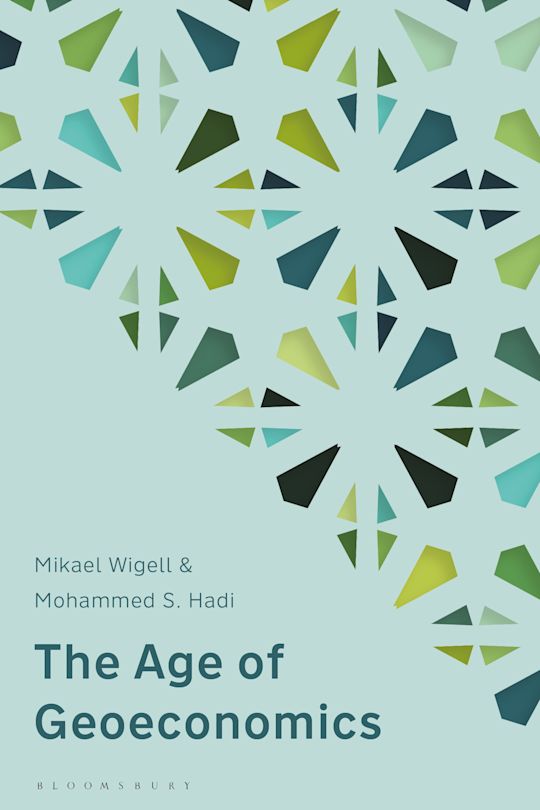

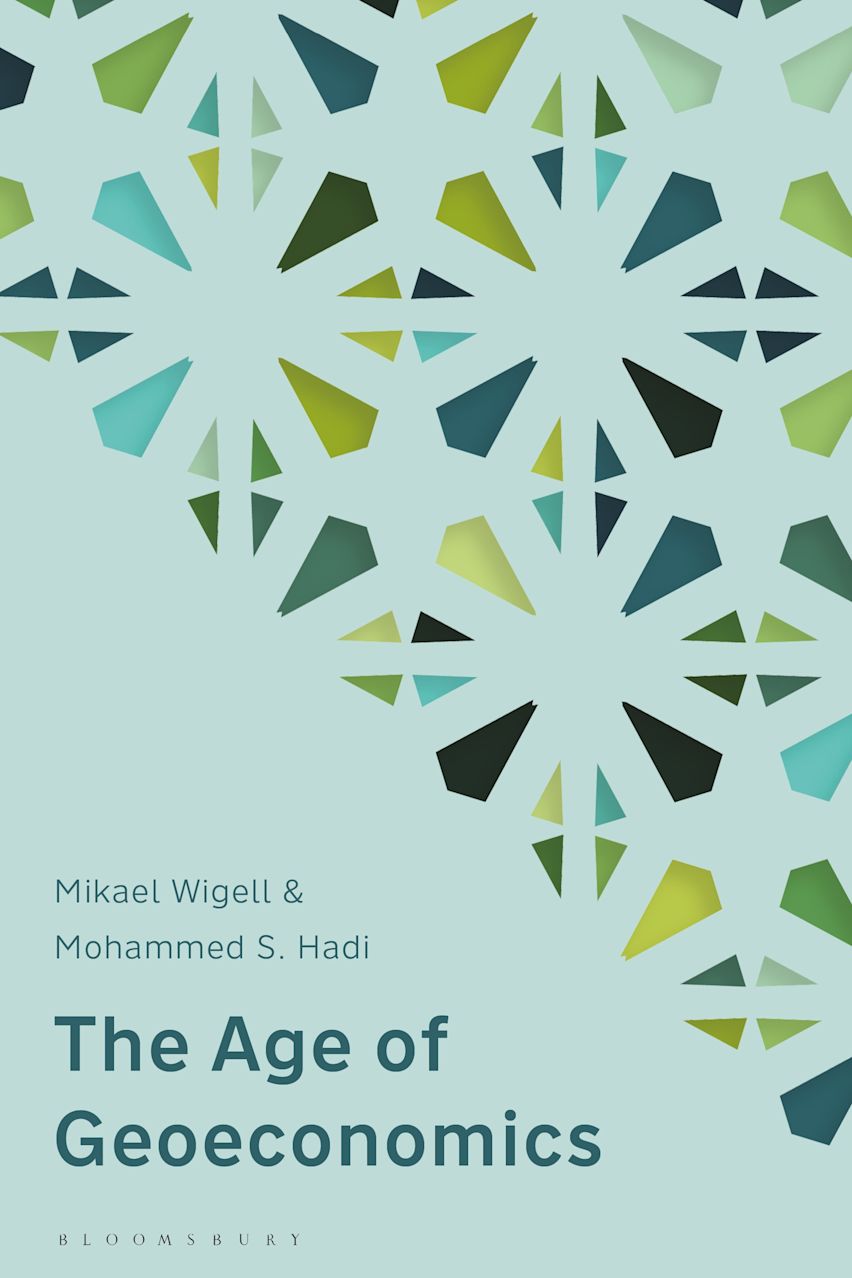
The Age of Geoeconomics
How the Logic of International Economics and Politics is Changing
Buying pre-order items
Ebooks and Audiobook
You will receive an email with a download link for the ebook or audiobook on the publication date.
Payment
You will not be charged for pre-ordered books until they are available to be shipped. Pre-ordered ebooks will not be charged for until they are available for download.
Amending or cancelling your order
For orders that have not been shipped you can usually make changes to pre-orders up to 72 hours before the publishing date.
Payment for this pre-order will be taken when the item becomes available
Description
Since the 1970s, market economics - which is concerned with opening markets for international trade and finance - has been guiding policymaking in many states, with the focus being on giving market actors a free reign in deciding where economic activity takes place. As a result, corporations have been globalizing their supply chains to take advantage of specialization and maximize efficiency, giving rise to a deepening economic interdependence across the globe.
Governments and policymakers took a benign view of this deepening interdependence for both economic and political reasons. Economically, interdependence was assumed to foster synergies and economies of scale, maximising gains for states by increasing efficiency within and across their economies. Politically, interdependence was assumed to incentivise cooperation and constrain conflicts between states.
Western governments and policymakers, in particular, believed that growing interdependence would encourage states to abandon power politics in favour of cooperation and integration into the liberal world order and global marketplace, benefitting the countries involved proportionally to their participation. However, The Age of Geoeconomics argues that this prevailing view has now been broken.
It powerfully explains how market economics is being supplanted by geoeconomics. Geoeconomics refers to the way in which countries use economic tools-trade, investments, financial policies and penalties, such as tariffs and sanctions-to achieve political or strategic goals. Instead of using military power, countries compete and influence each other through economic means.
The Age of Geoeconomics skilfully outlines ways in which governments may choose to impose trade restrictions such as tariffs to pressure other governments, invest in infrastructure projects to gain influence, or use control over key resources (like oil or rare minerals) as leverage in international negotiations.
This very timely book assesses the re-shaping of the economic world-order following the US election, including an analysis of 'MAGAnomics'.
Accessibility Information
Additional accessibility information
- PDF/UA-2, 1.4
- accessibility@bloomsbury.com
Hazards
The publication contains no hazards
Support for non-visual reading
Has alternative text descriptions for images
Navigation
- Page list to go to pages from the print source version
- Elements such as headings, tables, etc for structured navigation
- All or substantially all textual matter is arranged in a single logical reading order
Table of Contents
Introduction
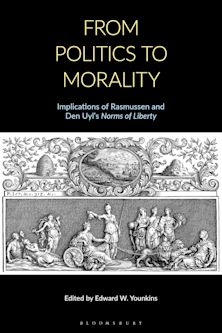
1. Rosolino A. Candela, George Mason University - Toward a Robust Defense of Liberalism: The Continuing Relevance of Norms of Liberty
2. Aeon J. Skoble, Bridgewater State University - Liberty, Virtue, and Contemporary Political Philosophy
3. David Gordon, Ludwig von Mises Institute - a Critical Comparison of Rasmussen and Den Uyl's Metathetics with Thomas Nagel's Impersonal Standpoint
4. Jack Painter, member of the Federalist Society and The Philadelphia Society - Norms of Liberty Brings Order to Philosophical Confusion
5. Alberto Mingardi, IULM University - Middle-Class Flourishing
6. Edward W. Younkins, Wheeling University - Objectivism and Individualistic Perfectionism: Exemplars of neo-Aristotelian Eudaimonia
7. Winton Bates, independent researcher - How do Concepts of Spontaneous Order and Social Evolution Relate to Individual Flourishing?
8. Leonidas Zelmanovitz, Hillsdale College - Beyond the Physical: The Case for Social and Psychological Realities in Understanding Natural rights
9. Robert Gabriel Ciobanu, University of Bucharest - Political Philosophy and Culture: Culture's Role in Classical Liberalism
10. Jonathan Jacobs, George Washington University - Yes, there is a Problem with Liberalism
11. Paul Aligica - Norms of Liberty: From Foundation Political Philosophy to Political Systems. Notes from an Applied Theory Perspective
12. Teodora Ciobanu, University of Bucharest - Is Norms of Liberty Compatible with Religion?
13. Alejandra M. Salinas, Universidad Nacional de Tres de Febrero - Responding to Catholic Critiques of Liberalism: Insights from Norms of Liberty
14. Douglas J. Den Uyl, Liberty Fund and Douglas B. Rasmussen, St. John's University - The Limits of Liberty
Product details

| Published | 15 Oct 2026 |
|---|---|
| Format | Ebook (PDF) |
| Edition | 1st |
| Pages | 296 |
| ISBN | 9781350583047 |
| Imprint | Bloomsbury Academic |
| Publisher | Bloomsbury Publishing |
Related Titles