

This product is usually dispatched within 2-4 weeks
- Delivery and returns info
-
Flat rate of $10.00 for shipping anywhere in Australia
Description
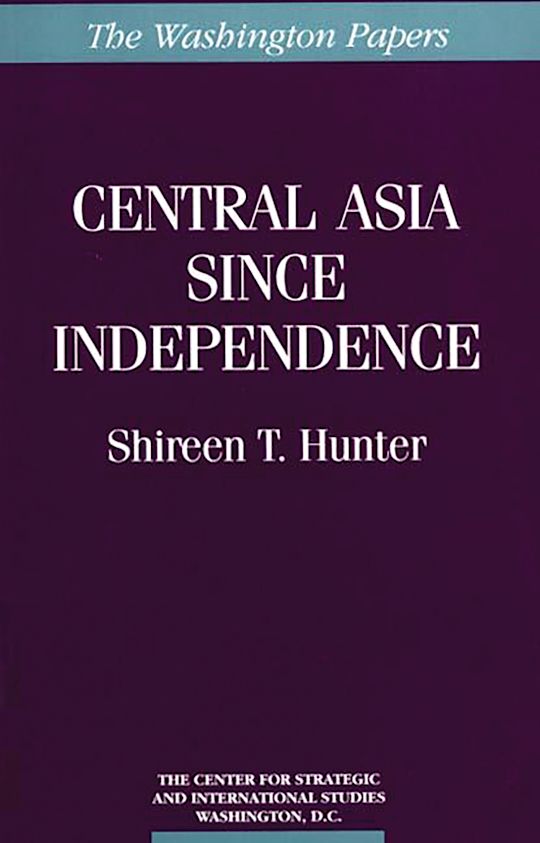
When the Soviet Union officially ended in December 1991 and was replaced by the Commonwealth of Independent States, the five Central Asian republics—Kazakstan, Kyrgystan, Tajikistan, Turkmenistan, and Uzbekistan—also became independent. This study examines the course of nationalist, ethnic, and pro-independence movements in the Central Asian region since 1991, as well as the geopolitical situation surrounding and involving these new states. Because of differences in size, ethnic composition, historical and cultural characteristics, resource base, and geographical location, these countries' patterns of evolution during the post-independence period have varied greatly. Nevertheless, during the last few years, certain basic common patterns have emerged, both in the political and economic development of the Central Asian states and in their external relations. These patterns and developments are analyzed here by a noted expert in Eurasian studies.
Table of Contents
Introduction
Internal Dynamics: Challenge and Reform
Central Asia: Historical, Ethnic, Cultural, and Geopolitical Context
Political Ideology and Institutional-Building
Central Asian Political Systems
Economic Revitalization and Reform
External Relations
Intra-Central Asian Relations
Intra-CIS Relations
Central Asia and Its Neighbors
Central Asia and the West
Index
Product details
| Published | 21 Jun 1996 |
|---|---|
| Format | Paperback |
| Edition | 1st |
| Pages | 240 |
| ISBN | 9780275955397 |
| Imprint | Praeger |
| Dimensions | 235 x 156 mm |
| Series | The Washington Papers |
| Publisher | Bloomsbury Publishing |

ONLINE RESOURCES
Bloomsbury Collections
This book is available on Bloomsbury Collections where your library has access.
Related Titles


