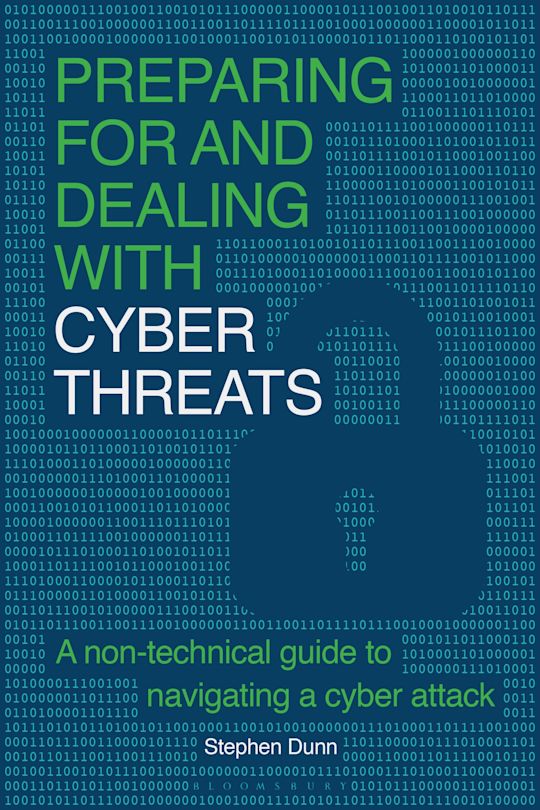
Preparing for and Dealing with Cyber Threats
A non-technical guide to navigating a cyber attack

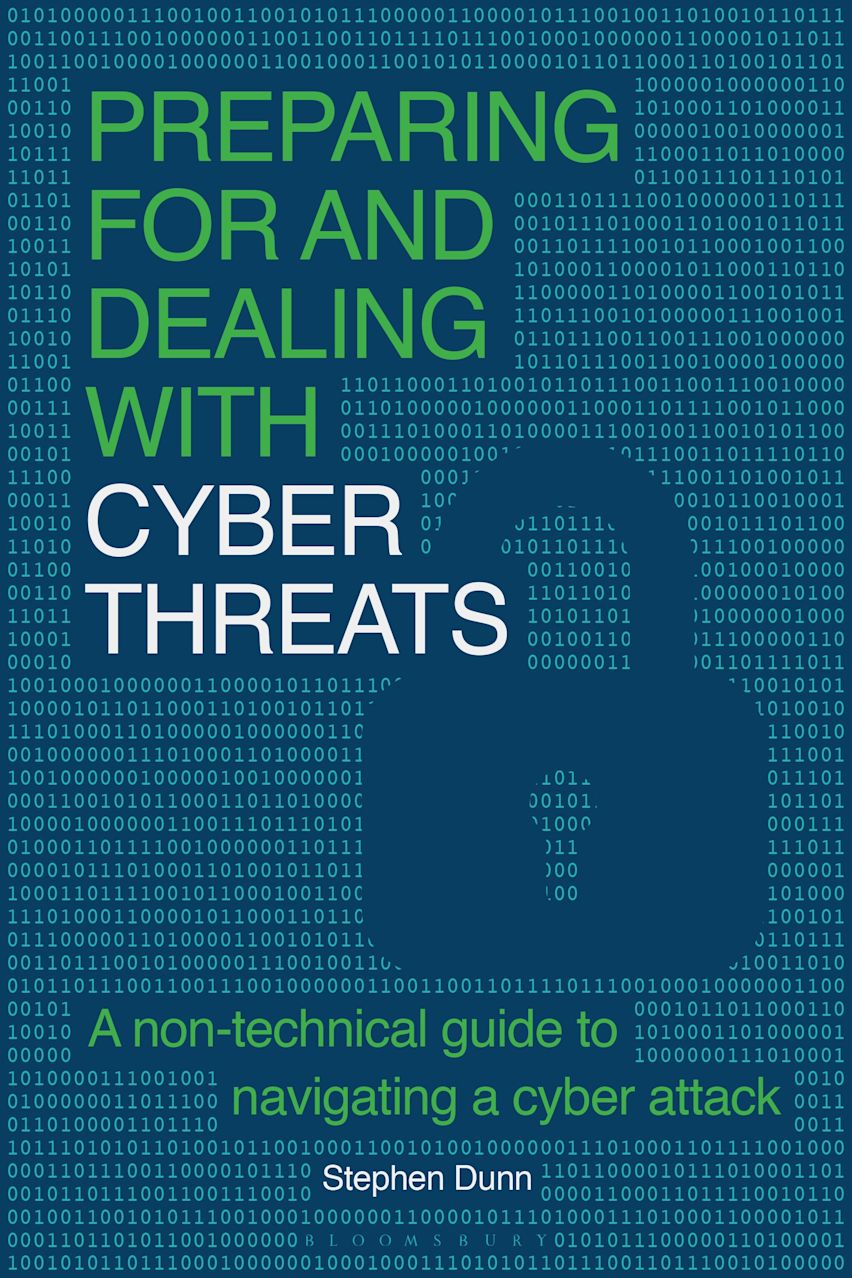
Preparing for and Dealing with Cyber Threats
A non-technical guide to navigating a cyber attack
Buying pre-order items
Ebooks and Audiobook
You will receive an email with a download link for the ebook or audiobook on the publication date.
Payment
You will not be charged for pre-ordered books until they are available to be shipped. Pre-ordered ebooks will not be charged for until they are available for download.
Amending or cancelling your order
For orders that have not been shipped you can usually make changes to pre-orders up to 72 hours before the publishing date.
Payment for this pre-order will be taken when the item becomes available
- Delivery and returns info
-
Flat rate of $10.00 for shipping anywhere in Australia
Description
With the frequent and rapid advancements in technology, businesses are increasingly vulnerable to sophisticated cyber attacks. This accessible guide provides small business owners and non-technical managers with a framework for responding to cyber-attacks in real time.
Designed as a practical incident response for businesses without dedicated IT security teams, Preparing for and Dealing with Cyber Threats can be used during an actual crisis. From recognizing the early warning signs, through to recovering and building long-term resilience for your business, Stephen Dunn guides you through the complete incident response journey and demonstrates how readers can transfer these skills into other areas of their business.
Each chapter provides actionable templates, checklists and design-making frameworks that are designed to work when readers are under extreme stress. With templates and geography-specific information provided in appendices, this is your one-stop resource for preparing your business to tackle cyber attacks, and to provide your team with the skills to prevent them going forward.
Table of Contents
This is a general introduction to the book, giving some general background and explain what the book hopes to achieve.
Chapter 2: What cyber incidents actually are
This chapter talks about the most common types of cyber incidents in a non-technical manner to provide a foundation for the rest of the book. It also introduces some of the more common concepts such as the “cascade effect” where attacks can flow from each other.
Chapter 3: Recognising incidents when they happen
This chapter teaches the reader some practical identification skills to help differentiate actual attacks from normal IT issues and staff behaviour. It introduces some quick decision-making frameworks to help the reader practically.
Chapter 4: Preparing your business before an incident occurs
This chapter shifts from prevention and detection to preparation, with more practical advice to be prepared for an attack. A 90-day implementation plan and testing approaches ensure sustainable readiness.
Chapter 5: What to do in the first hour
This is the practical section designed to be referred to during a crisis. It contains practical guidance and will be supported by checklists, showing leaders how to avoid impulsive mistakes such as restoring systems prematurely, staying silent or rushing communications. Leaders learn to prioritise facts over assumptions, focus on limiting damage, and communicate clearly.
Chapter 6: Coordinating a full incident response
As incidents extend beyond the first hour, leadership becomes about coordination rather than personal heroics. Clear frameworks ensure that external specialists serve the business rather than inadvertently taking control.
Chapter 7: Communicating under pressure
Communication failures can sink incident response faster than technical issues. This chapter equips leaders with strategies for internal updates, regulatory notifications, and customer messaging. Leaders learn to acknowledge uncertainty without damaging trust, balance compliance with business messaging, and maintain stakeholder confidence.
Chapter 8: Recovery and return to normal
Recovery is often misjudged as simple system restoration, but this chapter reframes it as an opportunity for transformation. Businesses are urged to treat recovery as strategic investment, not cost.
Chapter 9: Learning and strengthening defences
Once systems are restored, the real value lies in learning. This chapter emphasises that incidents provide unique, high-stakes insights into business operations, team performance and stakeholder relationships.
Chapter 10: The transferable framework
This chapter shows how incident-tested skills, structured decision making, communication under pressure and coordinated leadership are transferable to every aspect of business. By leveraging lessons learned, businesses can convert cyber incidents into permanent competitive advantages.
Chapter 11: Building long-term resilience
This final chapter reveals how all of the previous learnings can build long-term resilience in a firm, and how to leverage that for future incidents.
Appendices
Including a digital emergency kit and communication templates.
Product details
| Published | 29 Apr 2027 |
|---|---|
| Format | Paperback |
| Edition | 1st |
| Pages | 192 |
| ISBN | 9781350623415 |
| Imprint | Bloomsbury Business |
| Dimensions | 234 x 156 mm |
| Publisher | Bloomsbury Publishing |
Related Titles