The Bloomsbury Handbook of Religion and Neoliberalism
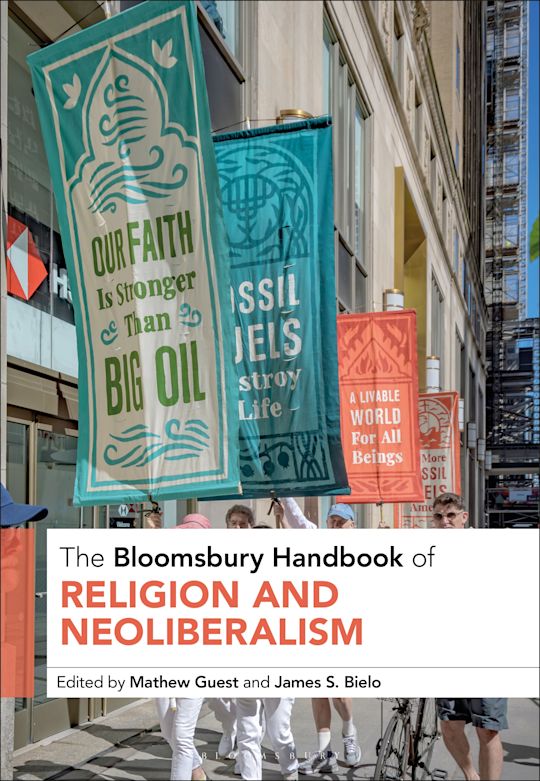

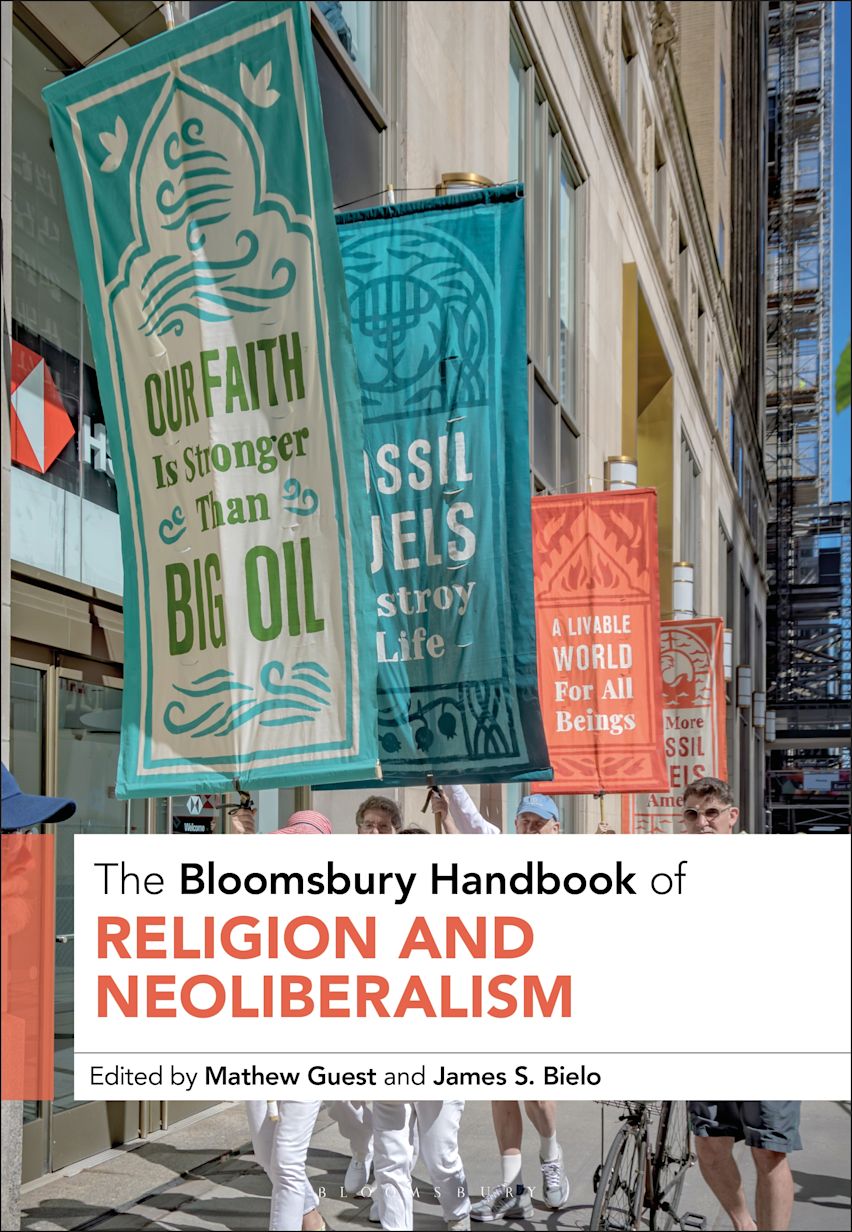
The Bloomsbury Handbook of Religion and Neoliberalism
Buying pre-order items
Ebooks and Audiobook
You will receive an email with a download link for the ebook or audiobook on the publication date.
Payment
You will not be charged for pre-ordered books until they are available to be shipped. Pre-ordered ebooks will not be charged for until they are available for download.
Amending or cancelling your order
For orders that have not been shipped you can usually make changes to pre-orders up to 72 hours before the publishing date.
Payment for this pre-order will be taken when the item becomes available
Description
What does neoliberalism – the powerful social forces that have promoted a pro-market ethos across the globe since the mid-20th century – mean for global religion in the 21st Century? How does this change the kinds of questions we ask about faith, truth and morality?
This handbook is the first to gather interdisciplinary scholars to examine the diverse global formations of religion and neoliberalism. Scholars explore ways in which religious movements have engaged with neoliberalism, both as a focus of opposition, a source of legitimacy, and a set of inherited assumptions that have been absorbed into the everyday and institutional realities of contemporary life. Case studies include United States, UK, the Philippines, Brazil, South Africa, Israel, Turkey, Colombia, Indonesia, Russia.
The book is organized into four sections:
· Mapping the conceptual debate, which presents a multi-layered account of neoliberalism's provenance and contemporary influence on religious phenomena
· Cultural variations, which explores the interaction between religious and neoliberal forces within a wide range of locations across the globe
· Religion within global flows and networks, which probes these kinds of interaction as they proceed across national boundaries, exploring themes such as migration, tourism and global digital media
· Counter-narratives and critique, which addresses emerging ethical questions concerning power, marginality and deprivation. This final section attends to the complicity of neoliberal religious formations in pressing moral problems that trouble our contemporary world.
Accessibility Information
Additional accessibility information
- EPUB 3.0
- Conforms with the requirements of EPUB Accessibility Spec v1.1
- WCAG level AA
- WCAG v2.2 compliant
- accessibility@bloomsbury.com
Hazards
The publication contains no hazards
Support for non-visual reading
- No accessibility features offered by the reading system, device or reading software are disabled or otherwise unusable with the product
- Has alternative text descriptions for images
Visual adjustments
Appearance of the text and page layout can be modified according to the capabilities of the reading system (font family and size, spaces, as well as color of background and text)
Navigation
- Page list to go to pages from the print source version
- Elements such as headings, tables, etc for structured navigation
- All or substantially all textual matter is arranged in a single logical reading order
- Content is enhanced with ARIA roles to optimize organization and facilitate navigation
- Purposes of all links are made clear
Rich content
Language tagging provided
Table of Contents
Part 1: Mapping the Conceptual Debate
Section Introduction, Mathew Guest (Durham University, UK)
1. The marketization of religion in neoliberalism 3.0, Marcus Moberg (University of Åbo, Finland)
2. Life in the New Market Society: Thinking the Neoliberal Revolution and its Consequences, François Gauthier (University of Fribourg, Switzerland)
3. Rational Choice Theory revisited: possibilities and limitations of economic approach to study of religion in Europe, Jörg Stolz (University of Lausanne, Switzerland and Jeremy Senn, independent scholar)
4. Neoliberal post-secularism, Adam Possamai (Western Sydney University, Australia)
Part 2: Geographical and Cultural Variations
Section Introduction, James Bielo (Northwestern University, USA)
5. Optimized; Spiritualized: Legacies of New Thought and the “Self Esteem” movement: Judith Brunton (Harvard University, USA) and Cody Musselman, Washington University in St Louis, USA
6. Marriage, Islam, and Neoliberal Selves: Navigating Kinship in Arab Detroit, Rose Wellman (University of Michigan-Dearborn, USA)
7. Neoliberalizing the tradition: Self-cultivation community life in the new Jewish spirituality.
Rachel Werczberger (Hadassah Academic College, Jerusalem, Israel)
8. Neoliberal Enchantments: Terror and The Miraculous in Colombia, Rebecca Bartel (San Diego State University, USA)
9. Responsibly Faithful: Neoliberal Governmentality and Middle Class Muslim Consumers, Ozlem Sandikci Turkdogan (University of Glasgow, UK)
10. Islamizing Neoliberalism and Neoliberalizing Islam, Daromir Rudnyckyj (University of Victoria, British Columbia, Canada)
11. Illiberal Neo-Liberal State and Religion in Putin's Russia, Marat Shterin (King's College, London, UK)
12. Rethinking Religious Markets from the Periphery, Marian Burchardt (University of Leipzig, Germany)
Part 3: Religion within Neoliberal Global Flows and Networks
Section Introduction, James Bielo (Northwestern University, USA)
13. Title tbc, Miranda Klaver (VU University, Amsterdam, Netherlands)
14. Death Girl Bosses: Spirituality, Feminism, and Capital in the Death Positive Movement,
Hannah Gould (University of Melbourne, Australia) and Anna Halafoff (Deakin University, Australia)
15. Optimizing Prayer: Innovating the Rosary for Catholic Users, Alyssa Maldonado-Estrada (Kalamazoo College, Michigan, USA)
16. Platforming Caste: How Hindu Ritual Apps Enable User Micro Networks to produce virtual repositories of Brahmanis, Dheepa Sundaram (University of Denver, USA)
17. Self-care beyond the self? The paradox of Jewish Mindfulness in a neoliberal Age
Mira Niculescu (Ecole de Hautes Etudes en Sciences Sociales (EHESS), CéSor, Paris, France)
18. Biospiritualities: Risk and reward in global circuits of medical waste, Britt Halvorson (Colby College, Maine, USA)
19. Cool Churches in Brazil: Global Networks, Aesthetics, and Aspirational Appeal, Cristina Rocha (Western Sydney University, Australia)
20. Leading the Neoliberal Church: Meaning-Making in Christian Leadership Development Programmes, John Coggin, Durham University, UK
Part 4: Counter-narratives, Critical Questions and the Quest for Change
Section Introduction, Mathew Guest (Durham University, UK)
21. Funding a Neoliberal Future: Political Economy and Religion in the Thought and Philanthropic Vision of John Templeton, Peter Jordan (University of Oxford, UK)
22. Beyond the Iron Cage: Religion, Possibility, Solidarity, Paul-François Tremlett (The Open University, UK)
23. Conservatism, Neoliberalism, and White Christian Libertarianism: The Religious Convictions of Business-Friendly Evangelical Voters in the United States of America, Gerardo Marti, Davidson College, North Carolina, USA
24. Religion and AI: Novel Neoliberal Partners in 21st Century Techniques, Systems, and Imaginaries of the Future, Beth Singler (University of Zurich, Switzerland)
Bibliography
Index
Product details

| Published | Jun 10 2027 |
|---|---|
| Format | Ebook (Epub & Mobi) |
| Edition | 1st |
| Pages | 416 |
| ISBN | 9781350551763 |
| Imprint | Bloomsbury Academic |
| Series | Bloomsbury Handbooks |
| Publisher | Bloomsbury Publishing |
Related Titles