- Home
- ACADEMIC
- Religious Studies
- Reference
- Breaking the Tablets
Breaking the Tablets
Jewish Theology After the Shoah
- Textbook
Breaking the Tablets
Jewish Theology After the Shoah
- Textbook

For information on how we process your data, read our Privacy Policy
Thank you. We will email you when this book is available to order
Buy from Bloomsbury eTextBooks
You are now leaving the Bloomsbury Publishing website. Your eBook purchase will be with our partner https://www.vitalsource.com.
Your credit card statement will show this purchase originating from VitalSource Technologies. They will also provide any technical assistance you might require.
You must sign in to add this item to your wishlist. Please sign in or create an account
Description
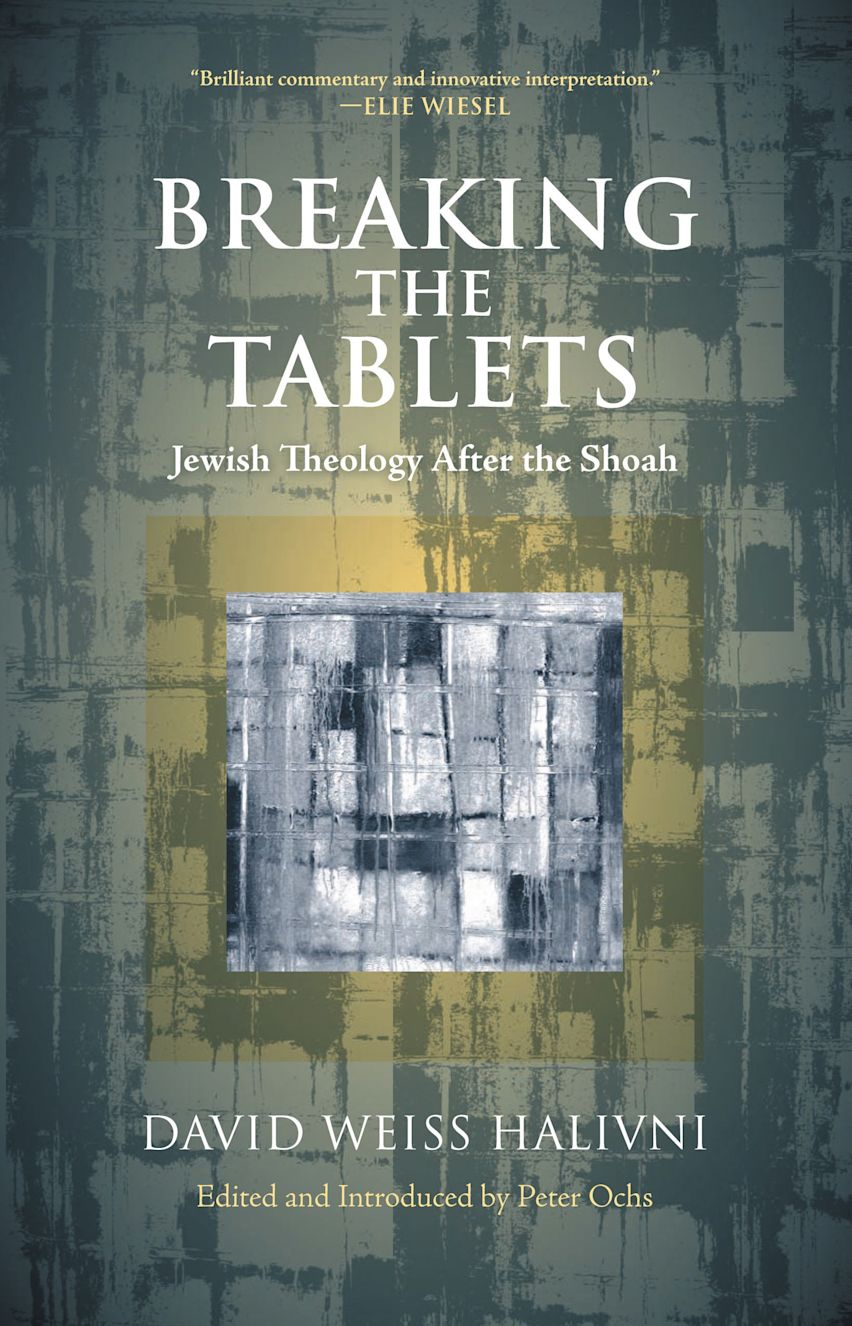
How is it possible, after the Shoah, to declare one's faith in the God of Israel? Breaking the Tablets is David Weiss Halivni's eloquent and insightful response to this question. Halivni, Auschwitz survivor and one of the greatest Talmudic scholars of the past century, declares that at this time of God's near absence, Jews can still observe the words of the Torah and pray for God to come near again. Jews must continue to study the classic texts of rabbinic Judaism but now with greater humility, recognizing that even the greatest religious leaders and thinkers interpret these texts only as mere people, prone to human error. Breaking the Tablets is important reading for anyone who feels burdened by the question of how it is possible to believe in God and practice their religion.
Table of Contents
2 Editor's Introduction
4 Chapter One: Prayer in the Shoah
6 Chapter Two: Restoring Scripture
8 Chapter Three: Breaking the Tablets and Begetting the Oral Law
10 Chapter Four: Between Auschwitz and Sinai
Product details
| Published | Aug 31 2007 |
|---|---|
| Format | Ebook (Epub & Mobi) |
| Edition | 1st |
| Pages | 144 |
| ISBN | 9780742566149 |
| Imprint | Rowman & Littlefield |
| Publisher | Bloomsbury Publishing |
About the contributors
Reviews
-
Erudition, scholarship, depth of knowledge, sharp insight, brilliant commentary and innovative interpretation: all these are to be found in David Weiss Halivni's new volume on the Talmud-a field in which he has been recognized as one of this generation's great Masters.
Elie Wiesel
-
This is a deep, powerful book. Halivni's achievement is awe-inspiring: he came through Auschwitz as a young man, then became one of the leading Jewish scholars in the world. In these essays he points to a way of spiritual and intellectual renewal for Judaism that has lessons for other faiths too. His combination of great learning, passionate prayer, and prophetic daring connects Sinai to Auschwitz and opens a way into the twenty-first century that is prayerful and faithful, yet realistic. He has an ideal editor and interpreter in Peter Ochs, whose comments and drawing out of implications can even at times articulate Halivni's message better than Halivni himself. Halivni and Ochs together are a sign of hope for academy, synagogue and civilization.
David Ford, professor of divinity, University of Cambridge
-
With profound insight, the greatest rabbinic scholar living today explicates for us some of the faith, hope, and intelligence that has kept and still keeps his soul from succumbing to the Shoah, which is his greatest agony, the greatest agony of our people and, indeed, the greatest agony in human history. He has done this by showing that his scholarly attempt to retrieve the original meaning of classical Jewish texts, which were written at times when God was closer, works in tandem with his continuing hope and prayer for the return to the world of the God who was absent in Auschwitz. This latest explication of his Jewish theology is considerably aided by the excellent interpretations it has elicited from Professor Peter Ochs.
David Novak
-
This small volume has been skillfully edited....Halvini [and Ochs] give us much to reflect on and ponder.
2008, Jewish Book World
-
Halivni speaks with the authority of scholarly erudition, life experience, and longing for the restoration of both Torah and God's nearness. . . . His passion and authenticity are deeply moving…. Breaking the Tablets is a careful and imaginative tracing in rabbinic literature … it is a significant contribution to post-Shoah theology.
Laurence Edwards, CCAR Journal: The Reform Jewish Quarterly
-
In these profound meditations on the future of Torah and Jewish theology, ably edited and explicated by Peter Ochs, David Weiss Halivni proposes how the gap between divine revelation at Sinai and divine absence at Auschwitz can and must be bridged.
Judith R. Baskin, University of Oregon
ONLINE RESOURCES
Bloomsbury Collections
This book is available on Bloomsbury Collections where your library has access.