
For information on how we process your data, read our Privacy Policy
Description
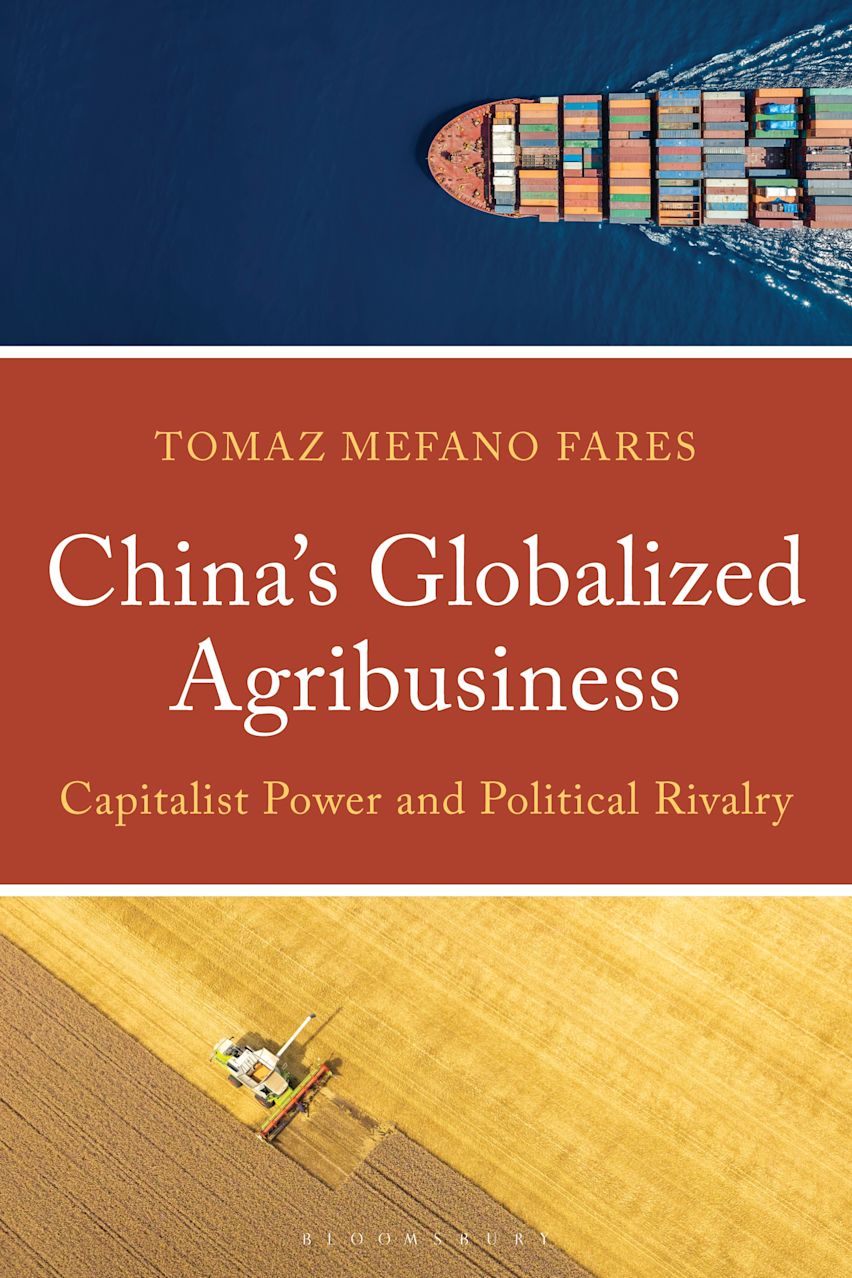
Challenging conventional views of the Chinese state, this book shows how agribusiness elites actively contest and reshape power, revealing a state defined by rivalry and shifting capitalist alliances.
China's political economy is often portrayed as stable and unified under the Communist Party, but this book argues that the reality is more complex. It shows how the rise of capitalist groups has generated political contestation and fractures within state institutions. The book presents the Chinese state as a contested space shaped by evolving state-market relations, arguing that deeper integration into the global economy has intensified internal rivalries.
Drawing on rich empirical evidence, primarily from Chinese sources, the book focuses on the soybean complex as a lens to analyse a globally integrated sector central to food security. It traces the diverging expansion trajectories of major agribusiness conglomerates, revealing five distinct capitalist groups whose executives and shareholders actively compete to shape policy and institutional arrangements. The state-owned COFCO – China's leading agricultural commodity trader under Xi Jinping – features prominently. Its rise illustrates tensions between national developmental priorities and the integration into global circuits of trade and finance, offering new insights into the shifting dynamics of China's political economy.
Table of Contents
List of Tables
About the Author
Acknowledgments
List of Acronyms and Abbreviations
Introduction
1. Global Integration, State Power, and Capitalist Transformation in China
2. The Rise of Transnational Capitalism (late 1980s-early 1990s)
3. New Policies, New Intra-capitalist Disputes in the Late 1990s
4. Moving Beyond State Capitalism: State-Transnational Alliances in the Early 2000s
5. Capitalist Power Struggle and the Politics of Food Security (2003–2008)
6. China's Uneven Internationalisation (2008-2013)
7. When State Capital Goes Global: The Rise of COFCO (2013 onwards)
8. From Global Integration to Domestic Contestation
Conclusion. Power and Contested Transformation in China's Global Agribusiness
Bibliography
Index
Product details
| Published | Nov 12 2026 |
|---|---|
| Format | Hardback |
| Edition | 1st |
| Pages | 272 |
| ISBN | 9798216475026 |
| Imprint | Bloomsbury Academic |
| Illustrations | 34 bw illus and 8 tables |
| Dimensions | 229 x 152 mm |
| Publisher | Bloomsbury Publishing |
Reviews
Related Titles