

Description
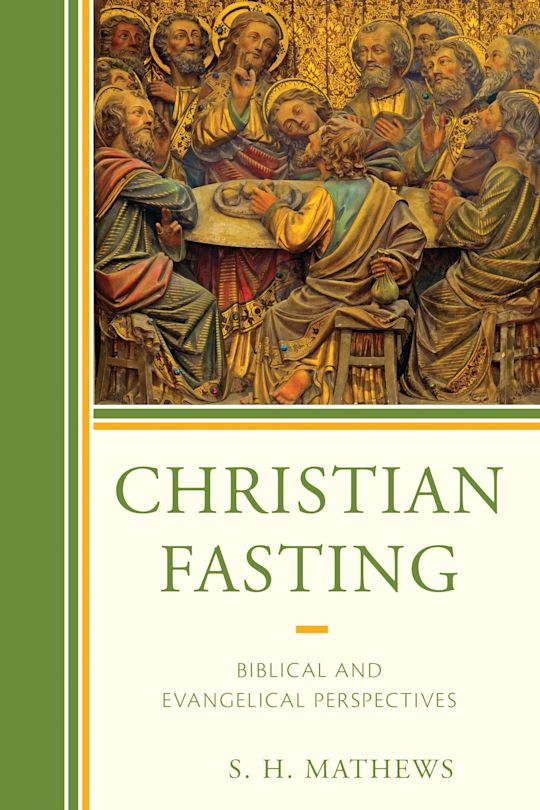
Rooted in a rigorous social-scientific reading of the New Testament, S.H. Mathews illuminates how fasting functioned within the honor-shame, kinship-bound, and collectivist world of the first-century Mediterranean. Drawing on anthropology, sociology, and historical criticism, the volume re-situates fasting not as a universal spiritual discipline but as a culturally coded practice signalling mourning, repentance, solidarity, and communal identity. By positioning early Christian fasting within broader Jewish, Greek, Roman and Near Eastern contexts, Mathews demonstrates how abstention shaped boundary-making, social meaning, and the maintenance of group identity.
The analysis engages closely with key biblical episodes, Moses' and Elijah's forty-day fasts, Esther's intercessory fast, Ezra's and Nehemiah's communal fasts, the critique of exploitative fasting in Isaiah 58, and the ritual fasts in Zechariah 7–8, before turning to the New Testament's reframing of fasting. Mathews offers detailed readings of Jesus' forty-day wilderness fast (Matthew 4), the controversies surrounding Pharisaic fasting, Anna's temple devotion in Luke 2, and the communal discernment fasts in Acts 13–14. Throughout, the study shows how concepts such as honor, limited good, the evil eye, dyadic identity, and Mediterranean social structures shape the rhetorical force and theological function of fasting across the canon.
Bringing this framework into dialogue with contemporary evangelical interpretations, Mathews challenges modern assumptions that cast fasting primarily as a private or devotional practice. Instead, the book presents a compelling and nuanced account of fasting as a socially embedded act-one that both reflected and reshaped early Christian piety, communal life, and interpretive traditions. A valuable resource for scholars, teachers, and advanced students, the volume offers a rich interdisciplinary lens for understanding one of the most overlooked phenomena in biblical interpretation.
Table of Contents
Introduction
1. An Anthropologist Reads the New Testament
2. Fasting in the Old Testament and Ancient Mediterranean World
3. Fasting in the New Testament: A Social-Scientific View of Fasting in the First-Century Mediterranean World
4. Fasting in Evangelical Christianity
5. Evangelicalism and the New Testament in Dialogue
Bibliography
Index
About the Author
Product details
| Published | Jan 27 2015 |
|---|---|
| Format | Ebook (PDF) |
| Edition | 1st |
| Pages | 164 |
| ISBN | 9798216221111 |
| Imprint | Lexington Books |
| Publisher | Bloomsbury Publishing |
Reviews
Related Titles