Kierkegaard and Plotinus
The Dialectical Movement to Absolute Love
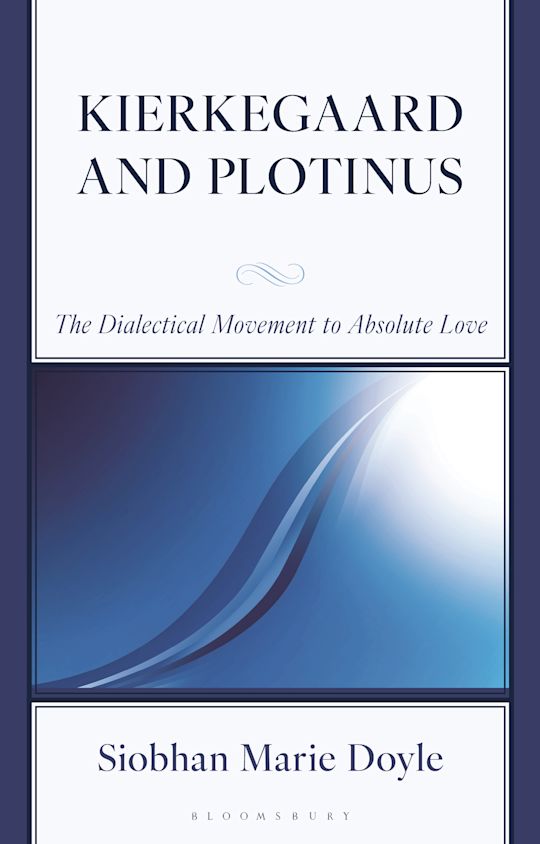


Kierkegaard and Plotinus
The Dialectical Movement to Absolute Love
Buying pre-order items
Ebooks and Audiobook
You will receive an email with a download link for the ebook or audiobook on the publication date.
Payment
You will not be charged for pre-ordered books until they are available to be shipped. Pre-ordered ebooks will not be charged for until they are available for download.
Amending or cancelling your order
For orders that have not been shipped you can usually make changes to pre-orders up to 72 hours before the publishing date.
Payment for this pre-order will be taken when the item becomes available
This product is usually dispatched within 1 week following the publication date
- Delivery and returns info
-
Free CA delivery on orders $40 or over
Description
Given the edifying and religious nature of Kierkegaard's philosophy, it seems counter-intuitive to suggest that there may be an underlying system supporting his philosophical project.
This comparative study between Plotinus (205–270AD) and Søren Kierkegaard (1813–1855) is fueled by the hypothesis that that are reflections of Plotinus's metaphysic in Kierkegaard's existential dialectic. The fundamental link between these two revolutionary philosophers is their shared affirmation of the reality of transcendence, a reality that extends far beyond Plato's metaphysical horizon.
Siobhan Marie Doyle demonstrates that certain literary tools and philosophical structures, used by Kierkegaard to challenge Hegel's abstract philosophy, can be traced back to the philosophy of Plotinus. In contrast to speculative philosophy, these two innovative philosophers ensure that becoming is prioritized over being. Both Kierkegaard and Plotinus reject understanding the human being as a completed entity. Instead, they see the individual as a potentiality that is initially animated by an underlying desire to become a true self and then powered by a longing to repose in the love of God.
For both philosophers, the fundamental dynamic is both the descent from God and the enduring possibility of a spiritual and loving reunion with God. This book acknowledges that Kierkegaard restricts the highest existential level to those who struggle to enact true Christian faith. Nevertheless, Kierkegaard's goal can be construed as parallel to the telos of Plotinus' philosophy.
Table of Contents
Acknowledgements
Introduction
I: An Introduction to Plotinus as the first Neoplatonist
II: Kierkegaard and Plotinus: The Movement from Recollection to Repetition
III: Kierkegaard and Plotinus: The Philosophy of Self
IV: Kierkegaard and Plotinus: The Truth of Subjectivity
V: Plotinus: The Three Phases of the Soul
VI: Kierkegaard: The Three Levels of Existence
Conclusion: Reflections of Plotinus' Metaphysics in Kierkegaard's Existential Philosophy
Bibliography
Index
Product details

| Published | Oct 01 2026 |
|---|---|
| Format | Hardback |
| Edition | 1st |
| Pages | 272 |
| ISBN | 9781666959413 |
| Imprint | Bloomsbury Academic |
| Dimensions | 229 x 152 mm |
| Series | New Kierkegaard Research |
| Publisher | Bloomsbury Publishing |

ONLINE RESOURCES
Bloomsbury Collections
This book is available on Bloomsbury Collections where your library has access.
Related Titles