Research and Teaching with Speculative Fiction
Transdisciplinary Readings and Methods
- Textbook
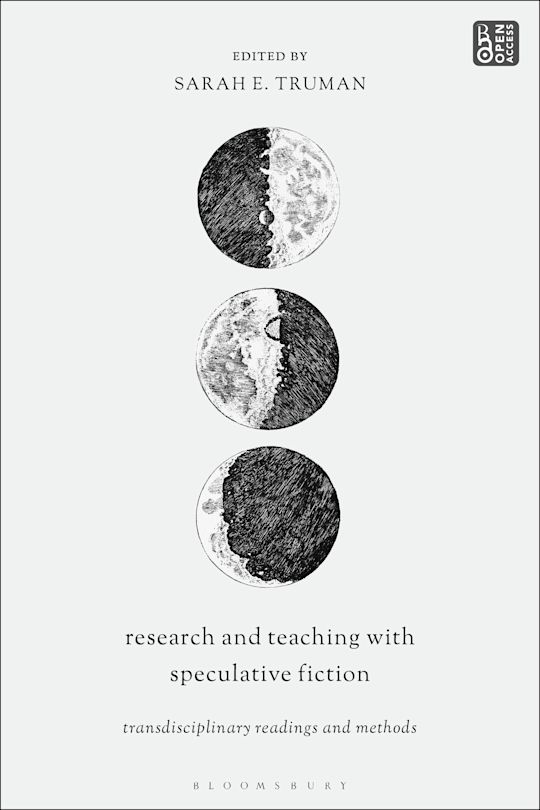

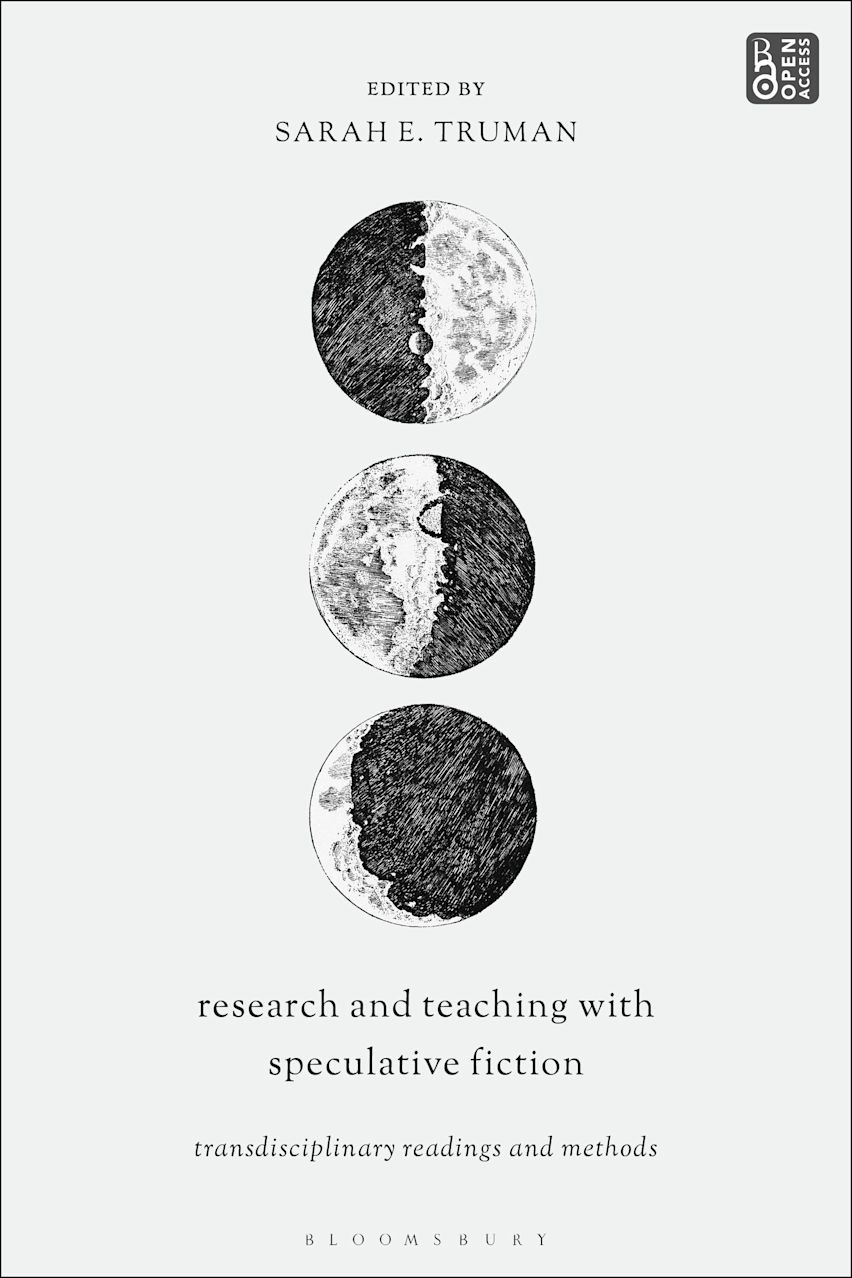
Research and Teaching with Speculative Fiction
Transdisciplinary Readings and Methods
- Textbook
For information on how we process your data, read our Privacy Policy
Description
This wide-ranging and timely collection of essays is ideal for readers who want to incorporate speculative fiction into their teaching and research across disciplines.
The terms speculation and speculative fictioning are increasingly used in education and interdisciplinary research methods to describe approaches grounded in asking “what if” questions that can unsettle the assumed certainties of the past, present, and future.
An Introduction by editor Sarah E. Truman and a Preface by Steven Shaviro describe what speculative fiction is and examine its critical implications, offering a theoretical framework for understanding its applications to research and pedagogy. The chapters that follow explore these modes of thinking in practice by drawing on speculative fictions to examine disciplinary concerns related to climate justice, disability justice, racial justice, prison abolition, genetics, AI, the future of work, educational technologies, and gender. Through reflective narratives and critical analyses, twenty-five international contributors engage literary works by authors such as Octavia Butler, Jorge Luis Borges, Ted Chiang, and N. K. Jemisin, alongside films and television series including Gattaca, The Matrix, Severance, and Star Trek, connecting these texts to their own research and thinking. Each chapter also includes discussion and writing prompts for use in classrooms and research seminars.
Table of Contents
Introduction: Speculative Fictioning Across Disciplines, Sarah E. Truman (University of Melbourne, Australia)
Part I: Worlding Future Justices
1. Creating Liveable Worlds: A Reflection on the Legacy of Octavia Butler's Parables, Danielle Purifoy (University of North Carolina, USA)
2. Edge of Tomorrow, Disability, and the Science Fiction of Technological Enhancement, Kelly Fritsch (Carleton University, Canada)
3. Unwriting Amazon, Max Haiven (Lakehead University, Canada)
4. Who Writes the Future? Speculative Fiction as Method for Pursuing Black, Native, and Afro-Indigenous Futures, Kenia D. Hale (Porch Water Press, USA)
5. Abolition Science Fiction, Phil Crockett Thomas (Stirling University, UK)
Part II: Ethics, Sciences, and Alien Maths
6. Bioethics, Science-Fiction, & the Myth of Post-Racial Futures, Christopher Mayes (Deakin University, Australia)
7. Umberto Eco's Foucault's Pendulum, a 12th Century Islamic Science Fiction Novel, and Wisdom, Sikeena Karmali Ahmed (Warburg Institute, UK)
8. On Maps, Twins, and 3D Printing, Chris Davies (Monash University, Australia)
9. Machine Learning in Genomics: Judgement Day, Nirmal Vadgama (Stanford University, USA)
10. Alien Mathematics, Elizabeth de Freitas (Adelphi University, USA)
Part III: Affect, Media, and Sensory Aesthetics
11. Speculative Meditation: Not So Distant, Chad Shomura (University of Colorado, USA)
12. Performing Speculations: Rehearsing Futures through Speculative F(r)ictions, Rumen Rachev (Utrecht University, the Netherlands)
13. Feeling Climate Futures Now, Michael Richardson (University of New South Wales, Australia)
14. Mythical Species, Michael Salu (Independent Artist, UK)
15. Alien, Script, and the Gift: Some Thoughts on Character Design, Mark-Making, and the Concept of Generosity, Yam Lau (York University, Canada)
Part IV: Uneven Schoolings and Pedagogical Promises
16. Dreaming, Country, Ignorance, Hope?, Aleryk Fricker (Deakin University, Australia)
17. Tending the Tea Dragons, Sid Mohandas (Middlesex University, UK)
18. Science Education and the Problem of Time, Tristan Gleason (Humboldt University, Germany)
19. The Borg, Star Trek's Disability Problem, and the Future of Interdependence in Special Education in England, David Ben Shannon (Sheffield University, UK)
20. Edtech Sci-Fi, Ben Williamson (University of Edinburgh, UK)
Part V: Chronotopias and Remembering Otherwise
21. SF and the Profession of Projection, David T. Fortin (University of Waterloo, Canada)
22. Severance, Storytelling and Digital Sociology, Ash Watson (University of New South Wales, Australia) 23. Truth, Fantasy, and the Historian's Quest, Matthew R. Keynes (University of Melbourne, Australia)
24. Drowned Worlds, New Economies: The Power of Science Fiction, Ali Riza Taskale (Department of Social Sciences, UK)
25. Broken Earths & Building Worlds, Kathryn Yusoff (Queen Mary University London, UK)
Index
Product details

| Published | Jul 23 2026 |
|---|---|
| Format | Ebook (Epub & Mobi) |
| Edition | 1st |
| Pages | 224 |
| ISBN | 9781350557741 |
| Imprint | Bloomsbury Academic |
| Publisher | Bloomsbury Publishing |
Reviews
Related Titles