- Home
- ACADEMIC
- History
- Latin American History
- The United States and Venezuela during the First World War
The United States and Venezuela during the First World War
Cordial Relations of Suspicious Cooperation
The United States and Venezuela during the First World War
Cordial Relations of Suspicious Cooperation

You must sign in to add this item to your wishlist. Please sign in or create an account
Description
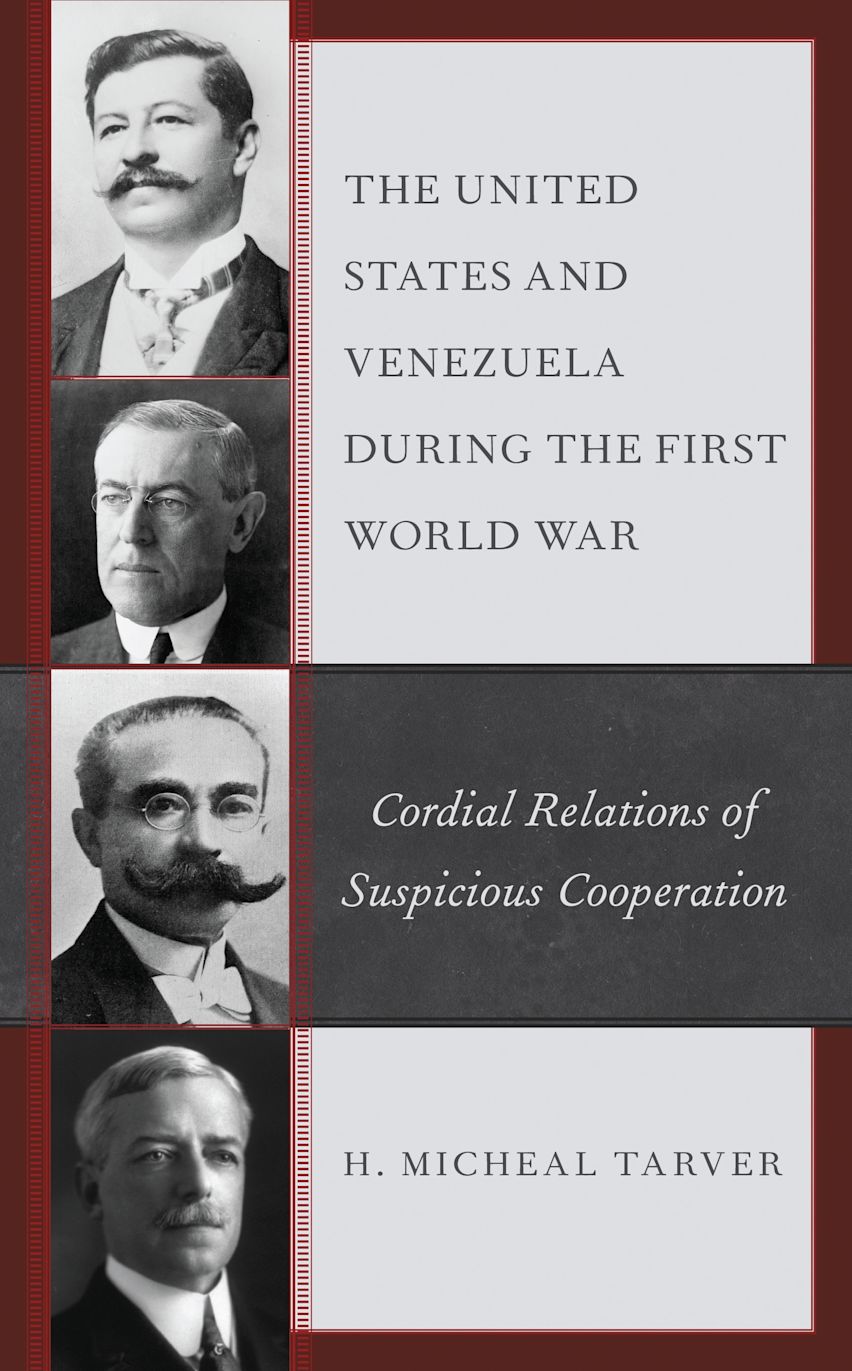
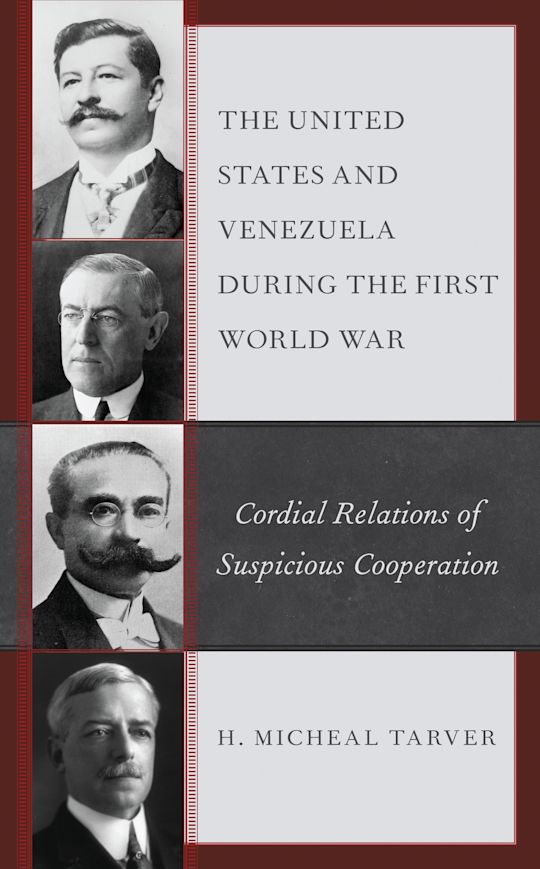
This book details the diplomatic relations between the United States and Venezuela during a pivotal time in world history. Through the utilization of archival materials and newspaper accounts, the author highlights the words of the major participants to demonstrate how the two nations worked together – sometimes hand-in-hand, sometimes face-to-face – to prevent the European War from spreading to the Western Hemisphere. Despite several efforts to develop hemispheric unity during the War, Venezuelan leaders perceived the policy of neutrality to be in the best interest of the country's national sovereignty. This book explores the personalities of the chief executives and selected diplomats to illustrate how both personnel and personalities molded their nation’s foreign relations. In the end, while perceived as two very different individuals who pursued different paths during the global conflict, the leadership styles of President Woodrow Wilson and General Juan Vicente Gómez were more alike than they realized. The overall cordial relations between the two nations during the period under review helped establish the foundation for the petroleum bonanza that United States companies would enjoy in the following years.
Table of Contents
Introduction
Map
Chapter 1: Setting the Stage
Chapter 2: Before the Global Conflict
Chapter 3: The Great War Begins
Chapter 4: Wartime Relations
Chapter 5: Conclusion
Bibliography
About the Author
Product details
| Published | Aug 19 2021 |
|---|---|
| Format | Ebook (Epub & Mobi) |
| Edition | 1st |
| Pages | 270 |
| ISBN | 9781498511100 |
| Imprint | Lexington Books |
| Illustrations | 13 b/w illustrations; 1 tables; |
| Publisher | Bloomsbury Publishing |
About the contributors
Reviews
-
This book addresses an important but little-explored aspect of Latin America’s response to the Great War. It features an engaging narrative based on an extensive bibliography gathered from the national archives of both the United States and Venezuela and a large selection of secondary sources. One of the very few books to appear on this topic since Percy Alvin Martin’s Latin America and the War published in 1921, it will be an appropriate and rewarding assignment in undergraduate and graduate courses dealing with diplomacy, Latin America in general, and World War I.
Jane Rausch, University of Massachusetts
-
Tarver's work delves into the key issue, little explored until now, of the process of transformation of the ties between Venezuela and the United States during the First World War—a fundamental juncture at the dawn of the twentieth century. This global conflict provoked transcendent changes in the political, economic, and diplomatic developments of the hemisphere, creating new relationships that the author presents in great detail. This work focuses on the positions, decisions, and agenda of Juan Vicente Gómez and Woodrow Wilson, two dissimilar personalities that led them to have policies with periods of both confluence and disagreement, but where the defense of national sovereignty and the maintenance of the European conflagration far from the American continent prevailed. Tarver’s research is based on a rigorous and meticulous use of historical and historiographic discourse and treatment of the various key sources. This work will be a significant contribution to the study of the relations between these two nations.
Francisco Soto Oráa, Universidad de Los Andes
-
Students of Venezuelan–US relations will welcome this fresh analysis of the countries’ diplomatic relations during the Great War. Abundantly documented, it draws on a wealth of information, much not seen in previous, similar studies. Students of US diplomatic history will find new information on US wartime policy toward both Venezuela and Britain—and Germany as well. The work’s scope is broader than that of others wedded to strict binational analysis of Venezuelan–US relations. Specialists in Venezuelan history will appreciate Tarver’s analysis of that country’s authoritarian president Juan Vicente Gómez, who is revealed here as walking a tightwire of neutrality between Germany—which he admired—and the United States, whose power and influence he respected. Gómez’s skill in not threatening US interests during wartime had the effect of insuring benign relations between his country and the United States in decades following the war.
James Henderson, Coastal Carolina University
-
In this thoroughly researched and richly detailed history, Tarver narrates a fascinating slice of Venezuelan history. On one level the book engages important things familiar to Latin American historiography—the influence of the rise of liberalism moving into the twentieth century and subsequent developing relationships with the United States in one of the historical periods characterized by mutual respect more so than before or afterwards. But what really sets this book apart is its engagement with world history on a more thorough level than is typical of the traditional area studies approach in our field. Thus, Tarver’s work is on the cutting edge of the increasing interest shown by Latin American historians in a broader global narrative, which will without doubt exert a powerful influence on world historiography more generally.
Richard Warner, Wabash College
ONLINE RESOURCES
Bloomsbury Collections
This book is available on Bloomsbury Collections where your library has access.