Gods, Judges, and Presidents
Trifunctional Archetypes in American Law and Government
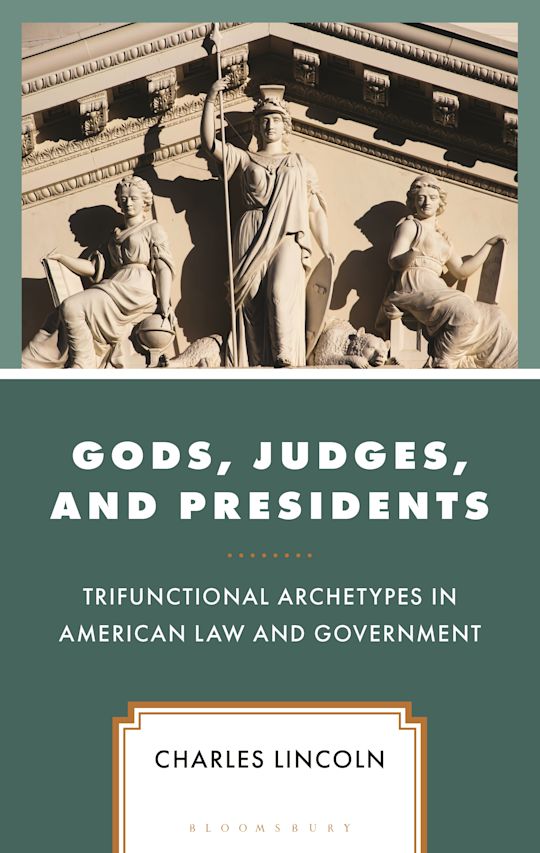

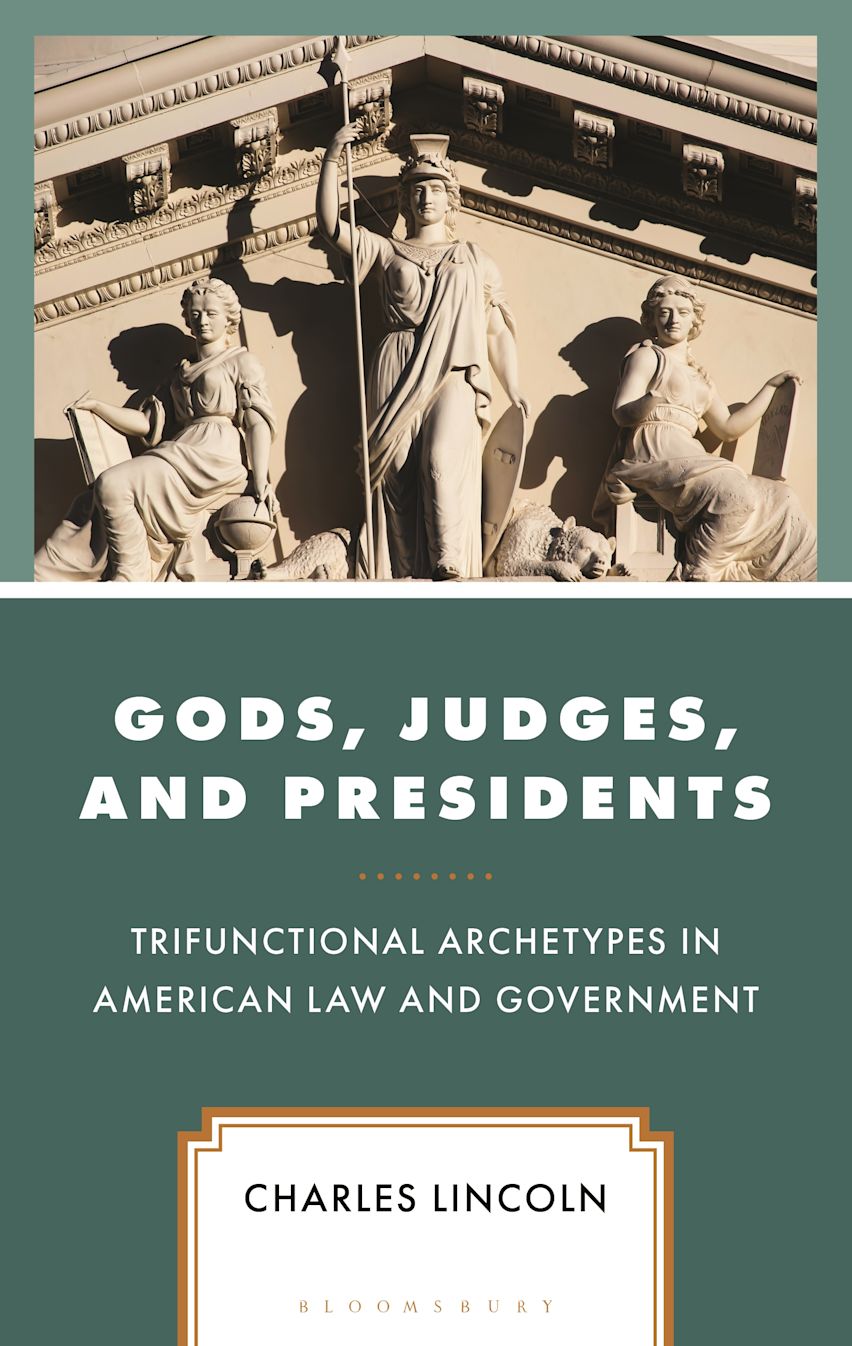
Gods, Judges, and Presidents
Trifunctional Archetypes in American Law and Government
Description
Charles Lincoln interprets the U.S. Constitution through the mythic and psychological lens of Georges Dumézil's trifunctional framework - priest, warrior, and producer - linking it to thinkers like Homer, Plato, Freud, and Montesquieu.
Rather than viewing the federal structure as a mere legal arrangement, the book reveals how judicial, executive, and legislative powers reflect enduring cultural archetypes, offering a fresh perspective on constitutional legitimacy, the separation of powers, and civic identity.
Accessibility Information
Additional accessibility information
- EPUB 3.0
- Conforms with the requirements of EPUB Accessibility Spec v1.1
- WCAG level AA
- WCAG v2.2 compliant
- accessibility@bloomsbury.com
Hazards
The publication contains no hazards
Support for non-visual reading
- No accessibility features offered by the reading system, device or reading software are disabled or otherwise unusable with the product
- Has alternative text descriptions for images
Visual adjustments
Appearance of the text and page layout can be modified according to the capabilities of the reading system (font family and size, spaces, as well as color of background and text)
Navigation
- Page list to go to pages from the print source version
- Elements such as headings, tables, etc for structured navigation
- All or substantially all textual matter is arranged in a single logical reading order
- Content is enhanced with ARIA roles to optimize organization and facilitate navigation
- Purposes of all links are made clear
Rich content
Language tagging provided
Table of Contents
A Note on the Text
Preface
Acknowledgments
Principal Characters
Introduction
Chapter 1: The US Constitution's Three Parts: A Legal Analysis
Chapter 2: A Homeric Analysis of the US Constitution: A Poetic Paradigm to Interpret the US Constitution
Chapter 3: The Soul of the Republic: Plato's Tripartite Psychology and the Structure of the US Constitution
Chapter 4: Montesquieu and the French Government (Ancien Régime)
Chapter 5: Polybius-The Constitution of the Roman Republic: A Counter Argument to the “Three Parts” of Government in the US Constitution
Chapter 6: A Freudian Psychoanalytic Etiology of the US Constitution: Another Paradigm to Interpret the US Constitution
Chapter 7: A Dumézilian Trifunctionalist Analysis of the US Constitution
Conclusion
Epilogue
Future Research
Bibliography
Periodicals Consulted
Table of Cases
Index
About the Author
Product details

| Published | 09 Jul 2026 |
|---|---|
| Format | Ebook (Epub & Mobi) |
| Edition | 1st |
| Pages | 240 |
| ISBN | 9781978762312 |
| Imprint | Bloomsbury Academic |
| Illustrations | 14 tables |
| Publisher | Bloomsbury Publishing |
Reviews

ONLINE RESOURCES
Bloomsbury Collections
This book is available on Bloomsbury Collections where your library has access.
Related Titles