- Home
- ACADEMIC
- Literary Studies
- Comparative Literature
- Reading New India
Reading New India
Post-Millennial Indian Fiction in English
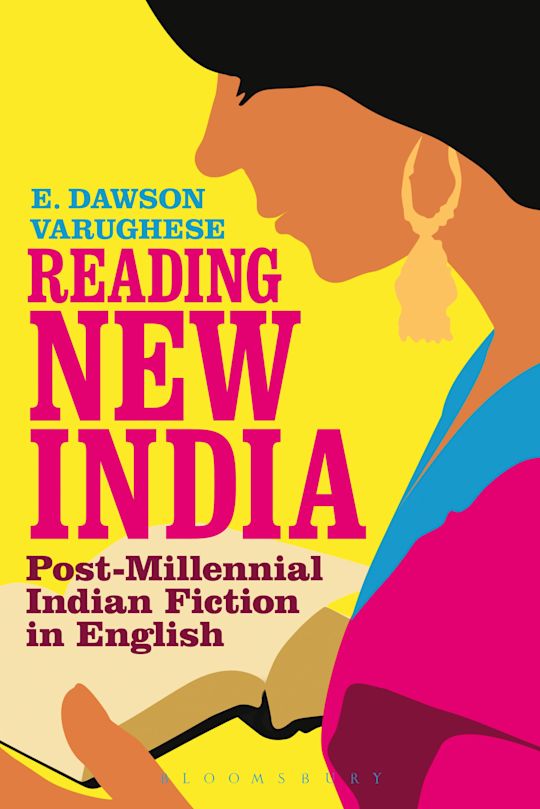
Reading New India
Post-Millennial Indian Fiction in English

You must sign in to add this item to your wishlist. Please sign in or create an account
Description
Reading New India is an insightful exploration of contemporary Indian writing in English. Exploring the work of such writers as Aravind Adiga (author of the Man-Booker Prize winning White Tiger), Usha K.R. and Taseer, the book looks at how the 'new' India has been recreated and defined in an English Language literature that is now reaching a global audience. The book describes how Indian fiction has moved beyond notions of 'postcolonial' writing to reflect an increasingly confident and diverse cultures.
Reading New India covers such topics as:
- Representation of the city: Mumbai and Bangalore
- Chick Lit to Crick Lit - Call centre dramas and corporate lives
- Crime novels and Bharati narratives
- Graphic novels
Including a chronological time-line of major social, cultural and political reforms, biographies of the major authors covered, further reading and a glossary of Hindi terms, this book is an essential guide for students of contemporary world literature and postcolonial writing.
Table of Contents
1.1 'Indianness' since Independence
1.2 Literary 'Indianness'
1.3 New India, a New Canon
2. Urban Scapes
2.1 Mumbai
2.2 Bangalore
3. Chick Lit - Crick Lit
3.1 Chick Lit
3.2 Crick Lit
4. Young India
4.1 Call Centres and Corporate Lives
4.2 MSMs
5. Crime Writing
5.1 Female Detectives
5.2 Difference and Death
6. Fantasy and Epic Myth
6.1 New [Fantastical] India
6.2 Bharat Fantasy
7. Graphic Novels
7.1 The Harappa Files (2011)
7.2 Kashmir Pending (2007)
Conclusion: New/Old Stories in Old/New Ways
Further Reading
Index
Product details
| Published | 14 Feb 2013 |
|---|---|
| Format | Ebook (PDF) |
| Edition | 1st |
| Extent | 192 |
| ISBN | 9781441136237 |
| Imprint | Bloomsbury Academic |
| Publisher | Bloomsbury Publishing |
About the contributors
Reviews
-
A thoughtful book, laden with insight, at the ways in which a new India is being written and read.
Namita Gokhale, Writer, publisher and co-director of the Jaipur Literature Festival
-
Reading New India provides a much needed and timely introduction to postmillennial India and Indian English literature within India as they move beyond the postcolonial past and forward into 'Newness'.
Transnational Literature
-
The splendor and the misery of Reading New India is that it whets the appetite for the fiction it introduces but necessarily fails to satiate the appetite thus awakened.
LSE Review of Books
-
Varughese's book is a gift for academics teaching Indian writing in English. And perhaps it will outshine all other books in the 'academic' library with its lively and pulpy, Karan Joharesque cover of bright yellow and pink.
The Book Review India
-
This is an ambitious and novel project, strenuous though, considering the vast body of literature to be considered. And [Dawson] has done it with a sense of academic objectivity. Reading New India: Post-Millennial Fiction in English - "the first book to focus on fiction at the millennium, the crossroad for India's globalisation" - is not a critique or a collection of reviews of individual novels or a generalised assessment of the oeuvre of individual writers, but a representation of various trends, themes, motifs, lineaments, zeitgeist, dynamic & conflicting cultural mores & values informing the fiction in hand, and an analysis of the core themes of some of the individual typical novels written in different voices.
The Hans India
-
The book is racy, giving you a smooth ride peppered with Indian exotica. You can't stop once you hold it in hands. It is a thorough work in itself. And who says, you get to know a place by reading its history and sociology only. Varughese fulfills it through her literary sojourn as well in an impeccable manner. Besides literary archives, you could place it in tourism section also to show the new rising India, in a big stroke.
Zafar Anjum, Kitaab Review
ONLINE RESOURCES
Bloomsbury Collections
This book is available on Bloomsbury Collections where your library has access.