News Media and the Positioning of the Dakota Access Pipeline
Representing Protest

News Media and the Positioning of the Dakota Access Pipeline
Representing Protest
Description
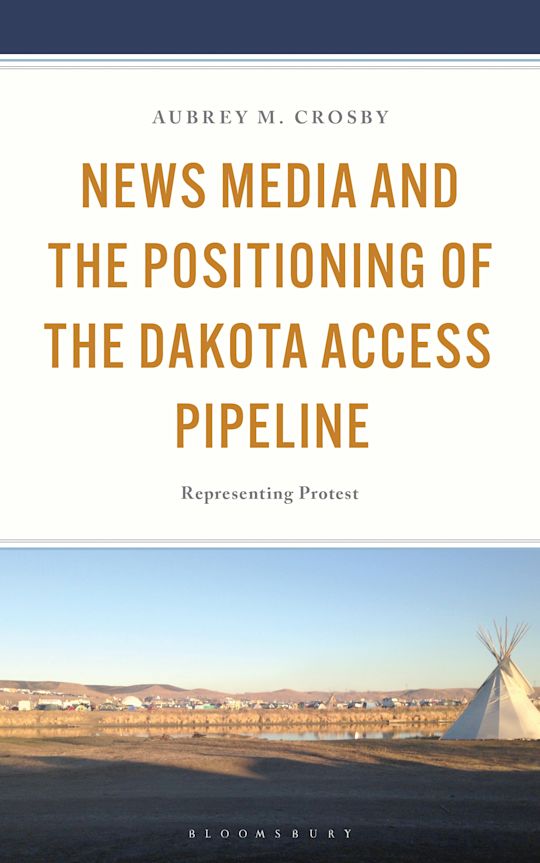
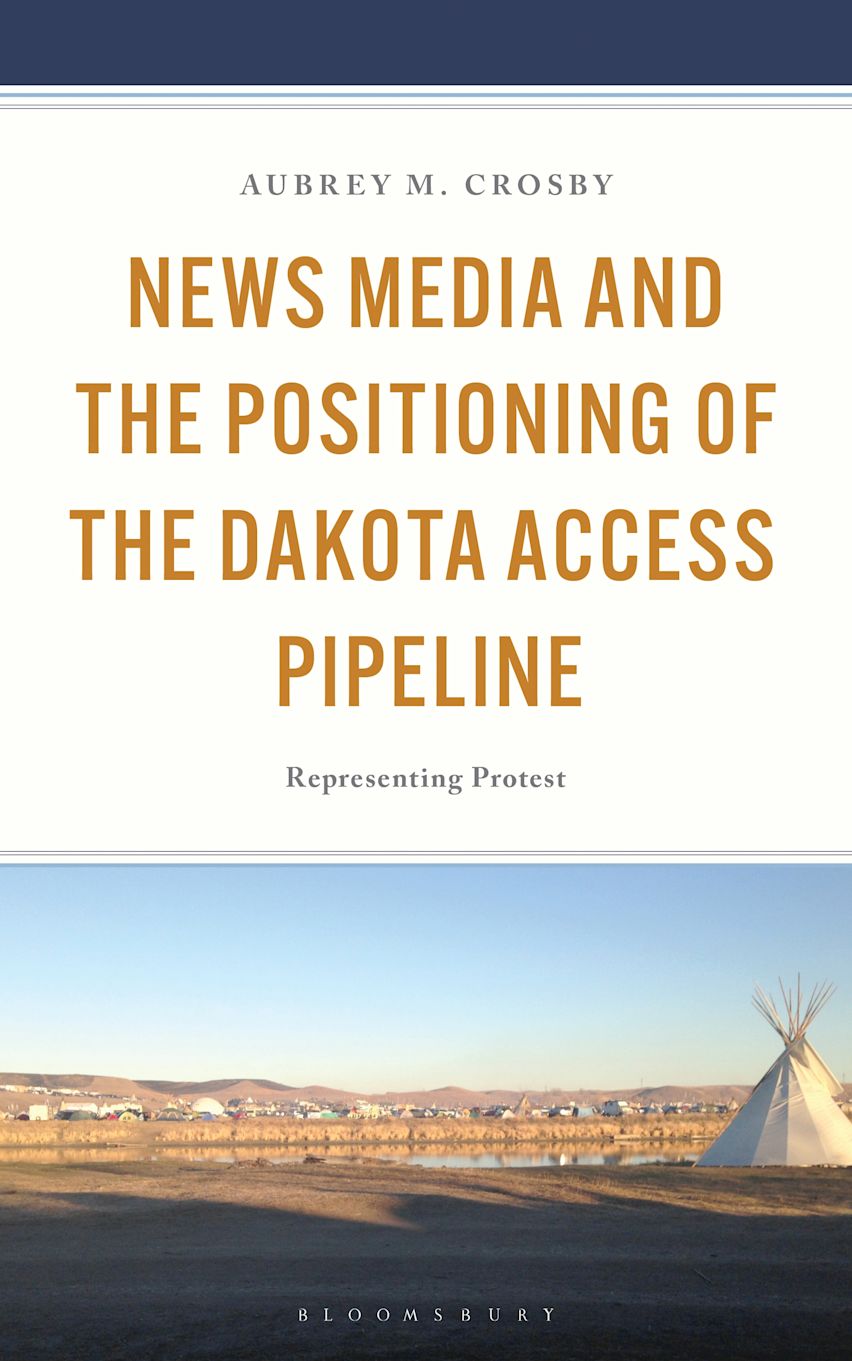
In News Media and the Positioning of the Dakota Access Pipeline: Representing Protest, Aubrey M. Crosby examines the structural and institutional forces governing the socialized practices of news production to provide a constructive critique of how news media frame events and participants in their protest coverage.
Crosby utilizes original data and the frameworks of critical discourse analysis, systemic functional linguistics, and the protest paradigm to perform critical analysis of mainstream news reporting of the Dakota Access Pipeline (DAPL) protests in 2016. She argues that news media significantly reduced the scope of the movement and (re)framed the reality of the #NoDAPL protests by fixating only on select key events and by painting participants as a collective monolith of “protestors,” a functional term which highlights their civil disobedience and erases their individual identities.
Though journalists may have had the opportunity and means to engage more critically with existing discourses, especially those surrounding Indigenous and Tribal sovereignty, mainstream reporting made little effort, if any, to do so. Through rigorous analysis, Crosby demonstrates how “protestors” were aligned with negative actions associated with emotional and destructive intent and juxtaposed with law enforcement, whose aggressive and ethically ambiguous actions were reframed as attempts to maintain law and order. Ultimately, by identifying and drawing attention to both problematic and productive practices of coverage, this work promotes constructive change regarding how power is wielded, maintained, and produced in organizations and in the social realm.
Accessibility Information
Additional accessibility information
- Conforms with the requirements of EPUB Accessibility Spec v1.1
- WCAG level AA
- WCAG v2.2 compliant
- Accessibility request contact
Support for non-visual reading
- No accessibility features offered by the reading system, device or reading software are disabled or otherwise unusable with the product
- Has alternative text descriptions for images
Visual adjustments
Appearance of the text and page layout can be modified (font, spacing, colors)
Navigation
- Page list to go to pages from the print source version
- Elements such as headings, tables, etc for structured navigation
- All or substantially all textual matter is arranged in a single logical reading order
- Content is enhanced with ARIA roles to optimize organization and facilitate navigation
- Purposes of all links are made clear
Rich content
Language tagging provided
Table of Contents
List of Abbreviations
Introduction
1. From Proposal to Picketing: The Pathway to the Dakota Access Pipeline Protest
2. Protectors, Protestors, or Criminals?: Media's Representation of Actors in the Dakota Access Pipeline Protest
3. 'Officials Say…': Representing Perspective in Protest Coverage, or the Role Sources Play in Constructing Dominant Narratives
4. Whose Land Is It Anyway? Positioning Objects of Conflict in Protest Discourse: Intersubjective Stance in News Media
Conclusion
Bibliography
Index
About the Author
Product details

| Published | 05 Feb 2026 |
|---|---|
| Format | Ebook (Epub & Mobi) |
| Edition | 1st |
| Pages | 120 |
| ISBN | 9781978765054 |
| Imprint | Bloomsbury Academic |
| Publisher | Bloomsbury Publishing |

ONLINE RESOURCES
Bloomsbury Collections
This book is available on Bloomsbury Collections where your library has access.
Related Titles