- Home
- ACADEMIC
- Psychology
- History & Philosophy of Psychology
- The Orphan Paradox
The Orphan Paradox
Destinies, Autocracies and Democracies in India and the United States
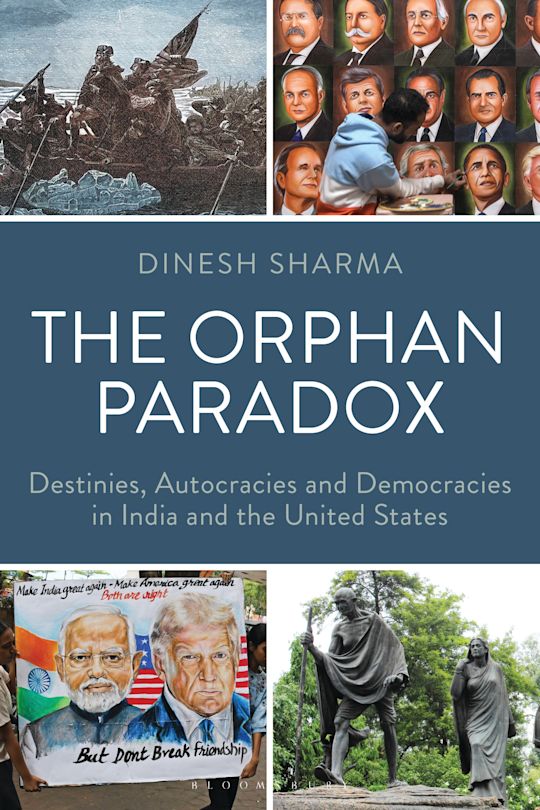
The Orphan Paradox
Destinies, Autocracies and Democracies in India and the United States

Buying pre-order items
Ebooks and Audiobook
You will receive an email with a download link for the ebook or audiobook on the publication date.
Payment
You will not be charged for pre-ordered books until they are available to be shipped. Pre-ordered ebooks will not be charged for until they are available for download.
Amending or cancelling your order
For orders that have not been shipped you can usually make changes to pre-orders up to 72 hours before the publishing date.
Payment for this pre-order will be taken when the item becomes available
You must sign in to add this item to your wishlist. Please sign in or create an account
Description
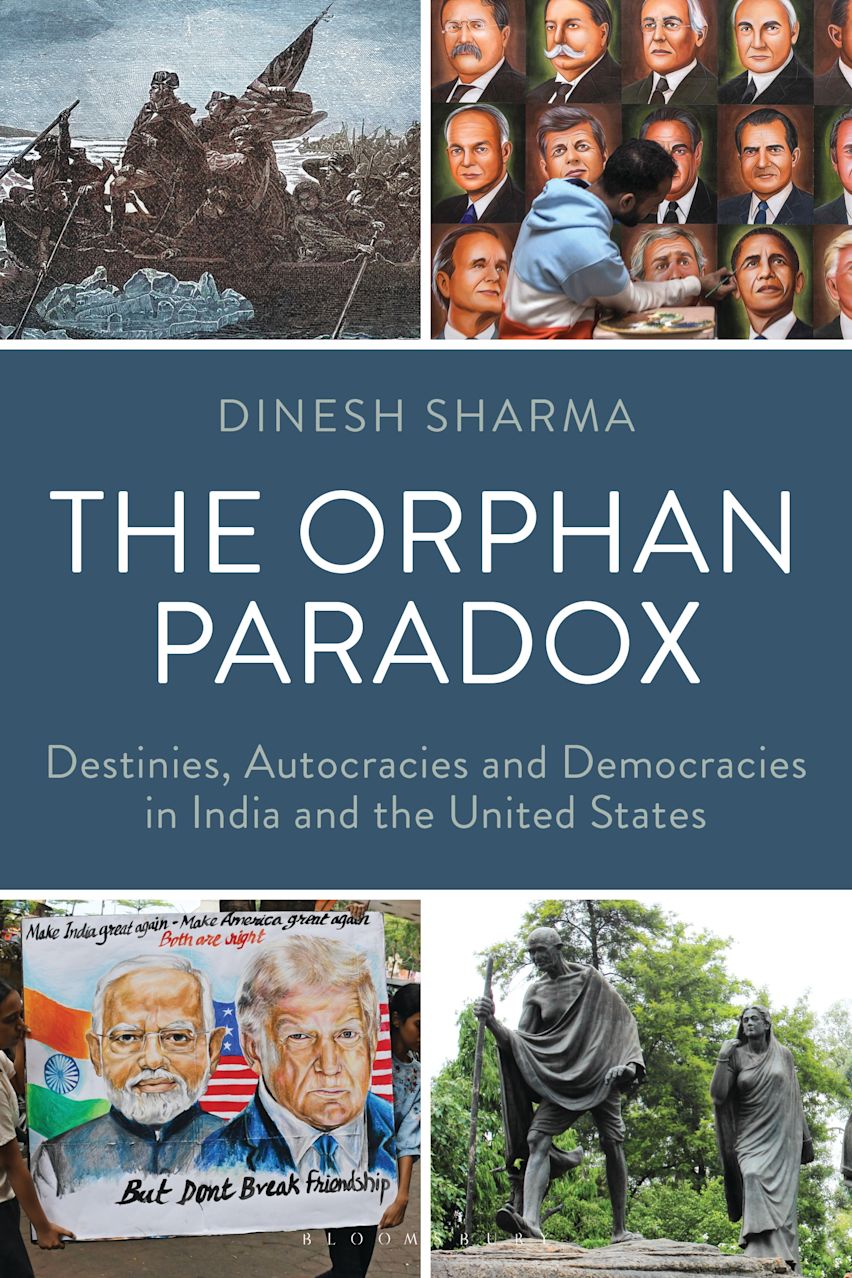
Why do democracies continue to elect 'orphaned' outsiders versus 'patrician' elites?
In The Orphan Paradox, Sharma offers an original meditation on the hidden wounds that shape political leadership. Building on his earlier works, including Barack Obama in Hawai'i and Indonesia (2012), Sharma fuses psychology, history, and political science to illuminate how leaders transform vulnerability into vision. Through vivid portraits that traverse continents and centuries, he traces how the United States and India - twin experiments in democracy born of colonial rupture - produced leaders who embodied both loss and renewal: Washington, Jefferson, and Madison in America; Gandhi, Nehru, and Ambedkar in India. From these founders emerged patrician families –the Adamses, Kennedys, Bushes, and the Nehru-Gandhi dynasty - whose inheritance of power eventually met the populist insurgencies of figures like Trump and Modi. For psychologists, historians and political scientists alike, The Orphan Paradox provides a new framework on the foundations of democracy, showing how personal loss shapes institutional design and how nations, like individuals, oscillate between trauma and transcendence. The result is a work of scholarship with a moral urgency - a study of how the orphaned souls continue to haunt, and perhaps redeem the democratic experiment.
Table of Contents
Note on Author
Foreword
Preface
Ch. 1: Introduction
Ch. 2: The Orphan Paradox
Ch. 3: The Founders of Democracies
Ch. 4: The Inheritors of Autocratic Dynasties
Ch. 5: The Populism of Nationalist Autocrats
Ch. 6: Political Cycles & Trauma Politics
Ch. 7: A Traumagenic Theory of Leadership
Ch. 8: The Orphan, the Strongman and the Oligarch
Ch. 9: Conclusion
References
Appendix
Product details
| Published | May 14 2026 |
|---|---|
| Format | Ebook (PDF) |
| Edition | 1st |
| Pages | 256 |
| ISBN | 9798216269151 |
| Imprint | Bloomsbury Academic |
| Illustrations | 10 b/w photos |
| Publisher | Bloomsbury Publishing |
About the contributors
Reviews
-
Combining psychology, history, and political science, The Orphan Paradox introduces a ground-breaking approach to understanding the development of national leadership. It compares the United States and India - two of the most populist democracies in the world - to present a new and insightful way of looking at political culture. Sharma's exposition of "traumagenic leadership" shaped by psychic wounds and traumas that affect "both nations and the figures who lead them" is particularly compelling.
Dr. Arturo G. Munoz, Senior Political Scientist, RAND Corporation, and former CIA officer.
-
This bold new volume discovers how a high percentage of American presidents and India's prime ministers have lost one or both parents as children, and how this deeply shaped their later success. Like Sharma's earlier volumes, the Orphan Paradox offers an eye-opening inside look into our political leaders that even these leaders themselves may not realize.
Harold Takooshian, PhD, Past-President, Division of International Psychology, American Psychological Association, USA
-
In this ambitious work of synthesis, Dinesh Sharma describes unexpected and intriguing parallels among the personalities, family configurations, and economic policies of pivotal leaders of the United States and India- leading democratic societies in the last half century.
Howard Gardner, Hobbs Research Professor of Cognition and Education, Harvard Graduate School of Education
-
Indian prime ministership has swung back-and-forth between the Nehru-Gandhi dynasty and "orphans" with some notable exceptions from the Janata Dal and Janata Party. Dr. Dinesh Sharma, a social scientist with a Doctorate from Harvard University in human development and psychology, took the intellectual effort to pinpoint the early childhood experiences of politicians, despots, and dictators as a psychological explanation for their misuse of power. While not a primary focus, the book's analysis of how social structures and the failure to form healthy bonds can lead to destructiveness would apply to anyone, including children who may have experienced a lack of proper care or emotional bonds.
Dr. Christian Bartolf, Gandhi Information Centre, Germany
-
The Orphan Paradox is a rare work that combines historical scholarship with psychological depth. Drawing on extensive research, Dr. Dinesh Sharma examines the lives of historic leaders across civilizations, revealing how early loss, trauma, and responsibility shape their political character and the destiny of democracy. The book integrates theories from human development, psychology, and trauma studies to illuminate how leadership traits are formed long before leaders enter public life. Moreover, interwoven with historical narratives is a story of youthful responsibility borne at an age far greater than one's own. This fusion of scholarship and lived experience makes The Orphan Paradox not only an important academic contribution but also a profoundly human reflection on leadership, resilience, and the burdens that shape those who are called to serve something larger than themselves.
Ying Hong, PhD, Professor, Patricia Ramsey Distinguished Research Scholar in Business Area Chair, Fordham University, USA